30 days to return. Free delivery for orders over $200
Your shopping cart is empty!
American Mahjong vs Chinese Mahjong at Home: How to Choose the Right Version for Your First Table
Jun
20,
2026
0 Comments
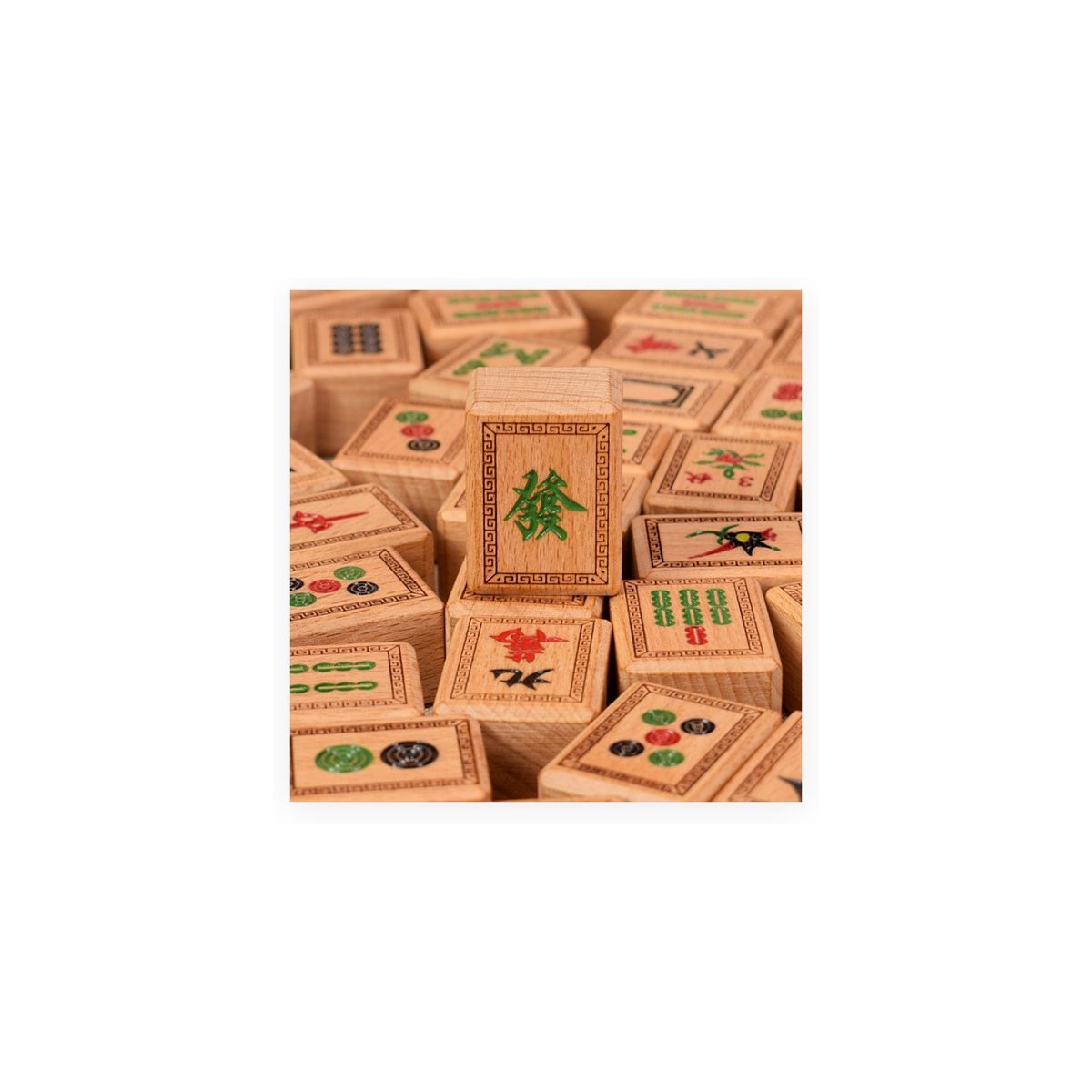
For many first-time buyers, the first real Mahjong question is not which color palette to choose or whether to buy a travel set. It is simpler and more important: should you start with American Mahjong or Chinese Mahjong?
Both are social, strategic, and deeply satisfying, but they create very different evenings at home. One leans on a yearly card, racks, and a structured rhythm that many American players love. The other feels more fluid, more pattern-based, and often easier to adapt when you want to learn the core language of the game. If you are building your first table for family and friends, the right choice depends less on tradition alone and more on how you want people to feel when they sit down.
Start with the experience, not just the rules
American Mahjong tends to feel guided from the very beginning. Players work from an official card of hands, the setup usually includes racks and pushers, and the social rhythm is often lively because players are reading the card, exchanging Charleston tiles, and talking through the momentum of the round. For hosts, that structure can be reassuring because the table has a visible framework.
Chinese Mahjong usually feels more open. Once players understand suits, honors, and basic hand-building, the game begins to flow in a way that feels direct and intuitive. There is less dependence on an external card, and many new players enjoy the satisfying moment when the logic of the tiles starts to click. If you want guests to learn the visual language of Mahjong itself, Chinese Mahjong is often the cleaner place to begin.
What changes in your setup at home
If you are considering American Mahjong, think in terms of a fuller hosting kit. Racks are part of the comfort of the game, pushers are often appreciated, and many players want a surface that gives each person enough room to manage their wall and their card. That setup can feel polished and festive, especially for recurring home game nights.
Chinese Mahjong can be more flexible. A solid table, clear lighting, and a comfortable set of tiles can be enough for a beautiful first experience. You can absolutely add mats, racks, and storage accessories, but the core requirement is really tile readability and a table that allows smooth movement. For households that prefer a more minimal footprint, that matters.
Learning curve: structured versus instinctive
American Mahjong is not necessarily harder, but it asks beginners to learn in layers. There is the Charleston, the card, jokers, hand-reading, and table rhythm. Some people love that complexity because it gives them a map. Others find that it delays the moment when the game feels natural.
Chinese Mahjong often gets beginners to that natural moment sooner. Once players know what the tiles mean and what a complete hand can look like, the game begins to feel tactile and readable. That makes it an excellent fit for mixed-age households, couples learning together, or hosts who want guests to leave the table feeling that they truly understand Mahjong rather than just a single ruleset.
Choose based on your guest list
If your future game nights are likely to include friends who already know American Mahjong, choosing that version makes practical sense. The familiarity of the card and the shared expectations can make hosting easier from day one. It also suits players who enjoy ritual, yearly updates, and the social fun of comparing hands and calling out strategic choices.
If your table will mostly be beginners, design-minded hosts, or family members who want a classic game they can grow into, Chinese Mahjong is often the more versatile foundation. It travels more easily across generations and across casual settings, from a weekend coffee table session to a proper four-player dinner party.
What kind of set should you buy?
For American Mahjong, readability and accessories matter. Larger, clear tiles, dependable racks, and storage that keeps everything organized are worth prioritizing. A host-friendly set should reduce friction, not create it.
For Chinese Mahjong, pay attention to tile weight, finish, and handling comfort. A good set should feel smooth in the hand, easy to sort, and satisfying on the table. If you want something that lives beautifully in your home, materials and case design start to matter more because the set often becomes part of the room between games.
The best answer for a first table
If you want the version that feels most connected to traditional tile reading and easiest to build into long-term family play, Chinese Mahjong is a strong first choice. If you want a highly social hosting ritual with a distinctly American table culture, American Mahjong may suit your home better.
The good news is that this is not a permanent identity decision. The right first set is the one that gets opened often, teaches comfortably, and makes guests want to come back. A beautiful home Mahjong table is built one enjoyable night at a time, and the best version is the one your household will actually keep playing.
Comments: 0
Leave a Reply
Leave a Reply
No comments

East Sun Industrial Centre, 16 Shing Yip Street, Kwun Tong, Kowloon, Hong Kong
(+852) 93519647
hello@mahjongday.com