30 days to return. Free delivery for orders over $200
Your shopping cart is empty!
American Mahjong Table Etiquette: How to Keep Game Night Relaxed, Fair, and Fun
Jul
08,
2026
0 Comments
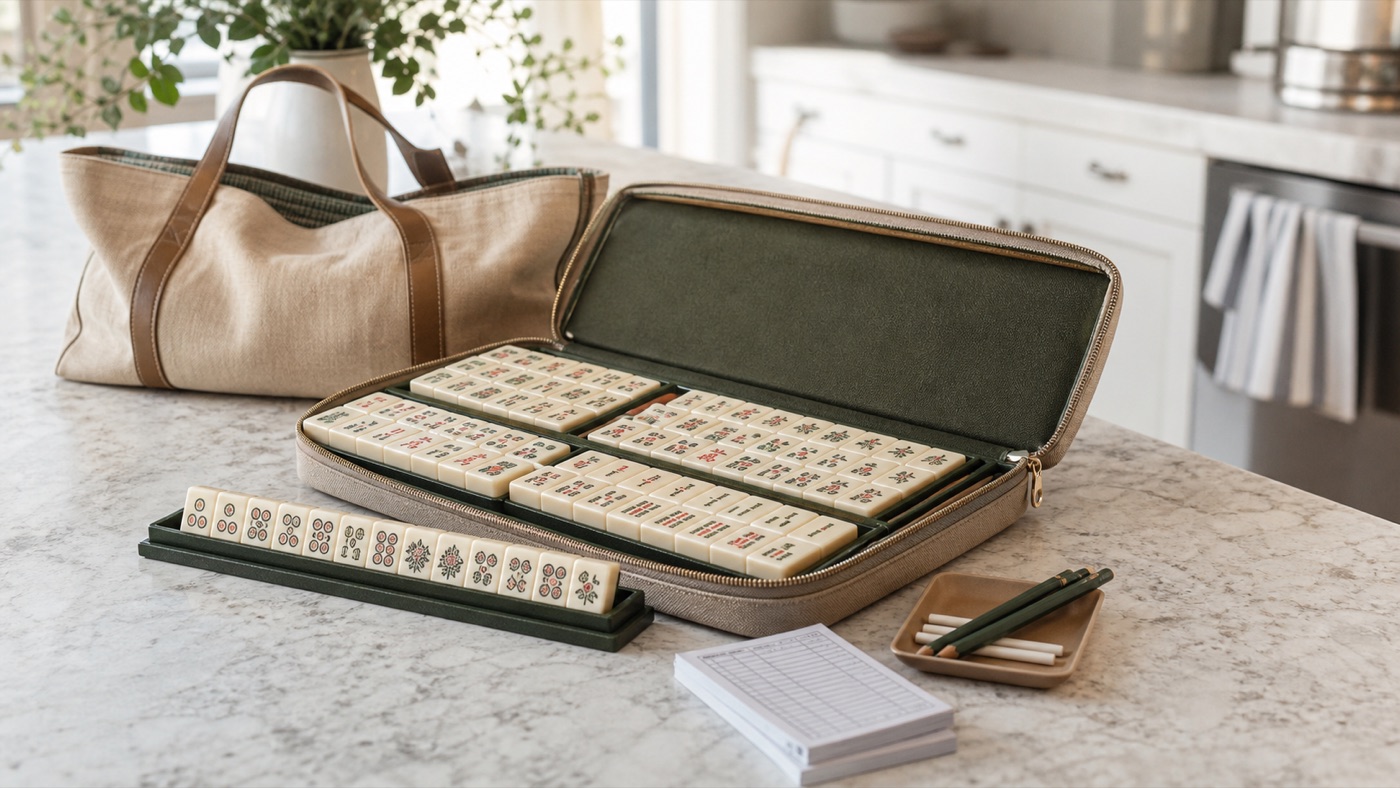
American Mahjong has a rhythm that feels different from many other tabletop games. There is the clack of tiles in racks, the quiet calculation during the Charleston, the quick lift of a hand when someone calls, and the very human mix of conversation, concentration, snacks, and second guesses. Etiquette is what keeps all of that pleasant.
For new players, etiquette can sound intimidating, as if there is a hidden rulebook beyond the National Mah Jongg League card. In practice, good table manners are mostly about respect: protect the flow of the game, make decisions clearly, and help the table feel comfortable for both confident and learning players.
Set the Table Before the First Tile Moves
A relaxed game begins before anyone builds a wall. Give each player enough elbow room for a rack, drink, score card, and discard area. If you are hosting, keep food slightly off to the side so tiles do not get sticky or crowded. A simple tray for snacks is better than plates scattered between racks.
Agree on basics at the start: whether the group is playing for points only, whether table talk is casual or minimal, and how strictly the group wants to handle timing. Experienced groups often assume these things are obvious. Newer players do not. A one-minute reset at the beginning prevents awkward corrections later.
Handle the Charleston With Care
The Charleston is one of the most social parts of American Mahjong, but it is also where newer players can feel rushed. Pass three tiles cleanly, keep them face down, and do not comment on what you are giving away. Even a harmless joke can reveal more information than intended.
If someone asks for a moment to think, give it. A graceful table does not punish a player for learning pattern recognition. At the same time, try not to turn every pass into a long strategy session. The best pace is steady, not hurried.
Make Calls Clearly
When you want a discarded tile, speak up promptly and clearly. Use the group vocabulary everyone understands, whether that is call, take, pung, kong, or simply naming the exposure. If two players call at once, pause and resolve it according to the rules before anyone moves tiles.
Once a tile is called and exposed, keep the exposure tidy. A neat exposure is easier for everyone to read and reduces disputes later. It also makes the table feel more polished, especially when the game is part of a dinner party or family gathering.
Keep Table Talk Friendly, Not Strategic
Conversation is part of the charm of a home mahjong night. The problem is not talking; the problem is talking in a way that influences play. Avoid comments like Are you sure you want to discard that? or I think she needs flowers. Even if you mean well, those comments change the table.
Better table talk lives around the game: refilling drinks, asking about the weekend, laughing at your own near-miss, or admiring a beautiful set. If a beginner needs help, offer it between hands unless the group has agreed to a teaching game.
Be Kind About Mistakes
Every player has misread a hand, exposed too quickly, forgotten a joker rule, or discarded something they immediately regretted. Correct mistakes calmly and move on. A sharp correction may be technically accurate, but it can make a new player reluctant to return.
For learning groups, decide ahead of time how generous you want to be. Some tables allow one gentle take-back during practice games. Others prefer strict play. Either approach can work if everyone understands it before the first hand starts.
Respect the Host Set
Mahjong tiles are made to be handled, but a good set still deserves care. Keep drinks on coasters, avoid placing tiles directly in food areas, and do not toss tiles across the table. If the set includes racks, pushers, coins, or a storage case, return pieces to the right place when the game ends.
This is especially important with gift-worthy or heirloom-style sets. Treating the set well is part of treating the host well.
Leave the Table Better Than You Found It
The final hand is not the end of etiquette. Help gather tiles, check that jokers and flowers are not hiding under napkins, and offer to reset the room if you were a guest. Small closing rituals make hosting feel lighter, which means game night is more likely to happen again.
Good American Mahjong etiquette does not make the table stiff. It does the opposite. It creates a setting where players can focus, learn, laugh, and enjoy the feel of a beautiful set in good company.
Comments: 0
Leave a Reply
Leave a Reply
No comments




East Sun Industrial Centre, 16 Shing Yip Street, Kwun Tong, Kowloon, Hong Kong
(+852) 93519647
hello@mahjongday.com