30 days to return. Free delivery for orders over $200
Your shopping cart is empty!
How to Host Mahjong in a Small Apartment Without Crowding the Room
Jul
22,
2026
0 Comments
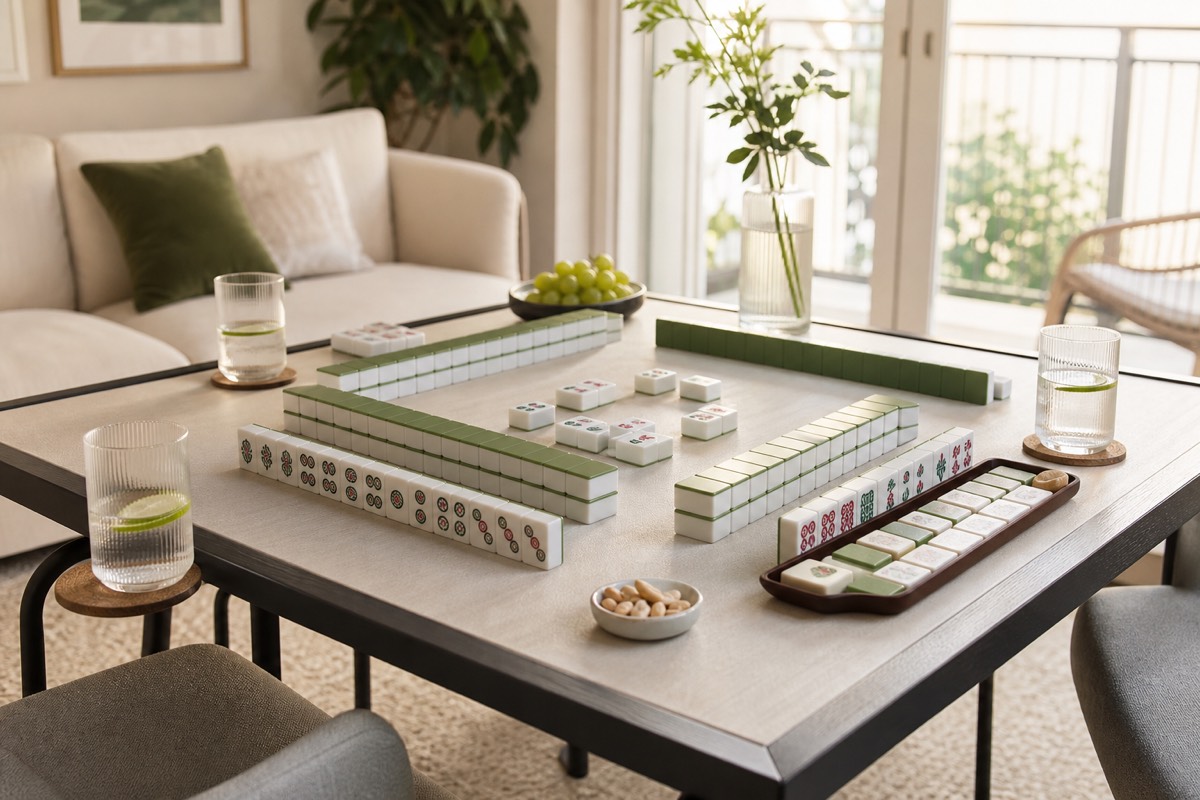
A good mahjong night does not require a formal game room, a banquet-size table, or a house full of extra chairs. In many city apartments, the most enjoyable games happen in the living room, around a dining table that also handles emails, takeout, flowers, and weeknight conversations. The secret is not having more space. It is making the space work harder without making the room feel crowded.
If you are hosting friends in a smaller home, a little planning can make mahjong feel relaxed instead of improvised. The goal is a table that is easy to read, easy to reach, and easy to reset between hands, with enough room left for real life: drinks, snacks, phones, and people moving comfortably around the room.
Choose the table before you choose the accessories
Start with the surface you already have. A compact dining table, breakfast table, square coffee table, or folding table can all work, but each one needs a slightly different setup. Measure the usable surface before you bring out every accessory. Four players need space for tile walls, racks or hands, discards, dice, and a central area that everyone can reach without leaning across cups and plates.
If the table is narrow, skip oversized serving trays and keep snacks on a side table. If the table is low, add floor cushions or ottomans so players are not bending over for two hours. If the table has a delicate wood, stone, or glass finish, use a soft mat to protect the surface and quiet the sound of tiles.
Keep the active game zone clean
Small spaces become uncomfortable when every object is treated as equally important. For mahjong, the active game zone should hold only what players need during the hand: tiles, dice, racks if you use them, and a small discard area. Everything else can live within reach but off the main surface.
A shallow tray is useful for spare tiles, scoring cards, pencils, extra dice, or table markers. It gives small items a home and makes cleanup much faster. When guests arrive, the table looks intentional. When the game ends, you can lift the tray away instead of hunting for scattered pieces under napkins and glasses.
Use vertical storage, not table sprawl
Apartment hosting is often a storage problem disguised as a space problem. A mahjong set with a tidy case, structured bag, or divided organizer makes the night feel easier from the first minute. Instead of opening several boxes across the table, keep the case on a chair, sideboard, or nearby shelf and bring pieces out in order.
This also helps new players. When the setup is calm, they can focus on learning tiles and turns instead of wondering where everything belongs. Clear storage is especially helpful if you play both American and Chinese mahjong, because extra pieces, racks, jokers, blanks, and score tools can quickly become confusing when they are all visible at once.
Serve snacks that do not fight the tiles
Food is part of a good game night, but sticky fingers and crowded plates are not friendly to mahjong tiles. Choose snacks that are easy to pick up cleanly: grapes, crackers, nuts, dried fruit, sliced vegetables, wrapped sweets, or small pastries served away from the main play area. Avoid sauces, powdered snacks, and anything that leaves oil on fingertips.
Drinks need a plan too. Put coasters at the corners and keep a towel nearby, especially if the table is wood. Stemless glasses, mugs, and lidded tumblers are more stable than tall stemware. These details are not fussy. They simply keep the evening moving without tile cleaning becoming part of the agenda.
Make lighting practical and flattering
Mahjong tiles need to be read quickly. In a small apartment, overhead lighting can create glare, while dim lamps can make suits and honors tiring to identify. The best arrangement is usually layered light: one warm lamp near the table, daylight when available, and no harsh spotlight directly reflecting off glossy tiles.
Good lighting also changes the mood. A table that is bright enough for play but soft enough for conversation feels more like a dinner gathering than a board game squeezed into a corner. If older players or beginners are joining, clear lighting is one of the easiest ways to make the night more comfortable.
Prepare a beginner-friendly rhythm
Small rooms can make a game feel intense if the pace is too fast. Before the first hand, decide how you will explain turns, discards, and scoring. Keep the first round slower, and let guests handle the tiles before rules become detailed. A beautiful set can be a teaching tool because people naturally want to look closely at the suits, winds, dragons, flowers, and jokers.
If your group is mixed experience, pair a confident player with a beginner at first. Keep reference cards on the side, not spread across the center. The table stays cleaner, and beginners feel less exposed when they need to check something.
Reset the room before the final hand ends
The best apartment game nights are easy to end. Keep the storage case open nearby during the last hand, clear snack plates before tiles are packed, and return accessories in the same order every time. This protects the set and makes the next game less work to start.
A small home can make mahjong feel more intimate, not less polished. With a readable set, a protective mat, smart storage, and a calm table plan, you can host a night that feels generous without needing extra square footage. The right setup lets the room stay itself while still making space for the game.
Comments: 0
Leave a Reply
Leave a Reply
No comments



East Sun Industrial Centre, 16 Shing Yip Street, Kwun Tong, Kowloon, Hong Kong
(+852) 93519647
hello@mahjongday.com