30 days to return. Free delivery for orders over $200
Your shopping cart is empty!
How to Read a Mahjong Set: Tiles, Suits, Honors, and What Beginners Should Notice First
May
28,
2026
0 Comments
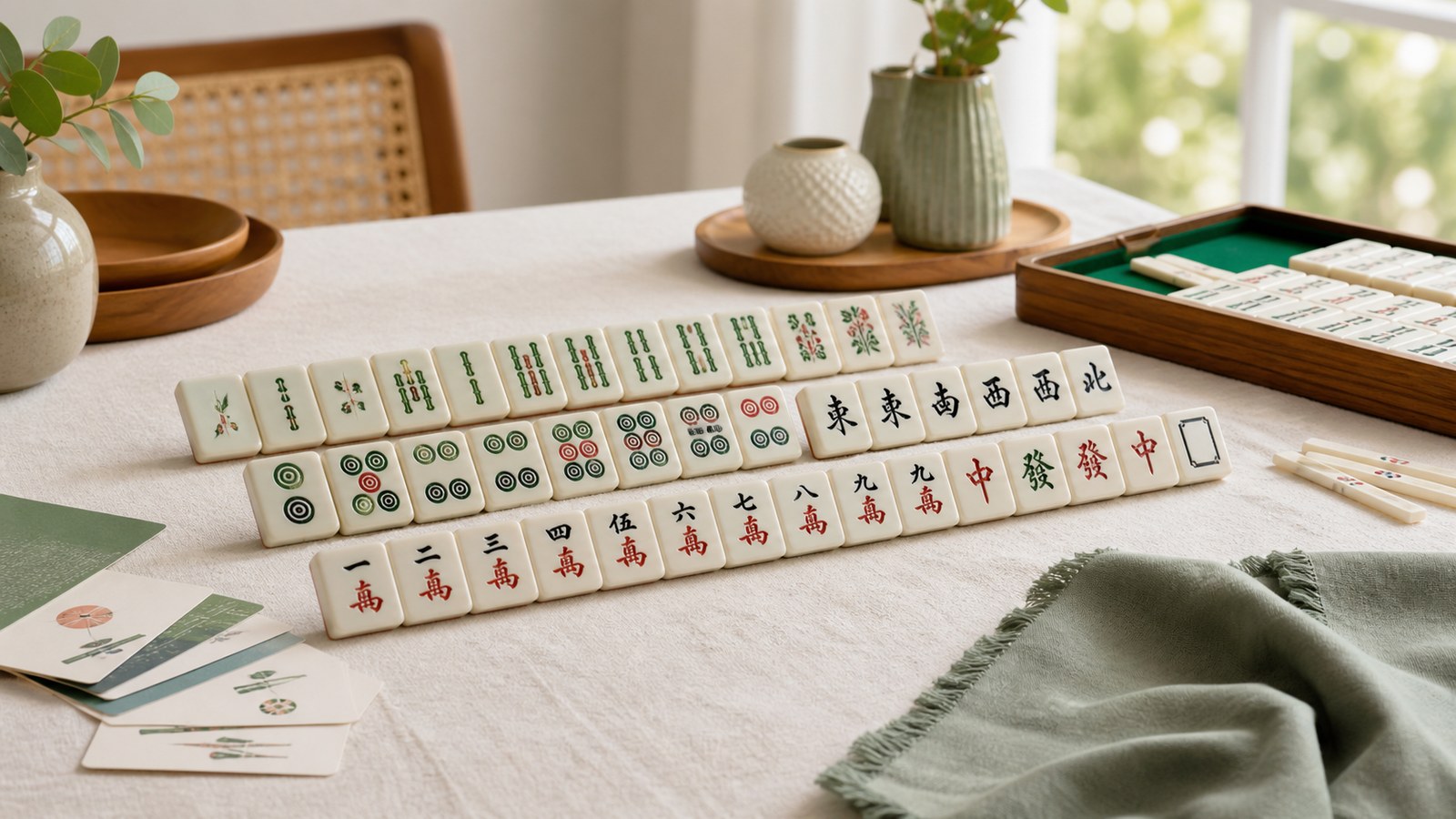
Opening a mahjong case for the first time can feel like looking at a beautiful language you have not learned yet. There are rows of symbols, suits, winds, dragons, flowers, dice, and sometimes extra pieces that do not immediately explain themselves. The good news is that a mahjong set becomes much easier to understand once you know how the tiles are grouped.
This guide is written for beginners, gift buyers, and casual hosts who want to feel more confident before game night. You do not need to memorize every scoring rule today. Start by learning what the tiles are, why they are grouped the way they are, and what details make a set easier for new players to enjoy.
The three main suits: dots, bamboo, and characters
Most mahjong sets include three numbered suits: dots, bamboo, and characters. Each suit usually runs from one through nine, with four copies of each tile. That gives you 108 suited tiles in many standard sets. These are the tiles players use constantly, so recognizing them quickly is one of the first skills to build.
Dots are often the easiest for beginners because the artwork looks like circles or coins. Bamboo tiles usually show green stalks or lines, although modern sets may use more decorative illustrations. Character tiles can be the most intimidating because they often use Chinese characters, but the idea is still simple: they are another numbered suit from one to nine.
A useful practice habit is to sort the three suits into separate rows before you play. Even five minutes of sorting helps your eyes learn the pattern. Once the suits stop blending together, turns become faster and the game feels less mysterious.
Honor tiles: winds and dragons
After the numbered suits, learn the honor tiles. These are not numbered. They usually include four winds and three dragons. The winds are East, South, West, and North. The dragons are commonly Red, Green, and White.
Winds can affect seat position, round structure, and scoring depending on the rules your group uses. Dragons are visually memorable and often important in winning hands. White dragons can confuse beginners because some sets show them as blank tiles or tiles with a simple border. That does not mean the tile is unfinished. It is part of the set.
Flowers, seasons, jokers, and extra pieces
Many sets include flowers and seasons. These bonus tiles are often more decorative than the numbered suits, and different rule sets use them differently. Some games treat them as bonus draws, while others set them aside.
American mahjong sets may also include jokers and racks. Some travel sets include compact accessories to make storage easier. If you are buying a set, always check the included tile list and accessories rather than relying only on the main product photo.
What beginners should look for in a first set
For a first mahjong set, readability matters more than ornament. Choose tiles with clear contrast, consistent printing or engraving, and symbols that are easy to distinguish from across the table. A beautiful set can still be frustrating if players constantly ask what each tile is.
Tile size also matters. Larger tiles are easier to read and feel satisfying on the table, but they require more storage space. Compact sets are convenient for travel and apartments, but they may be harder for total beginners or older players to read. A good beginner set balances comfort, clarity, and storage.
How to set up a learning table
Before the first hand, place the three suits in rows, then place winds and dragons separately. If your set has flowers, seasons, jokers, or blanks, make a small extra section. This simple table layout helps everyone understand the set visually before the rules begin.
If you are teaching friends, avoid explaining every exception at once. Start with tile recognition, then turn order, then how sets and pairs work. Scoring can come later. Mahjong becomes much more inviting when players feel they can recognize the pieces first.
Buying tip: match the set to the way you play
A weekly family game may need a sturdy, easy-to-clean set with practical storage. A gift set may need a more elegant case and presentation. A travel set should be compact and organized. A host set should look attractive on the table but still be easy to read under normal home lighting.
If you are comparing options, browse the Mahjong Sets collection and look for the details that affect real play: tile size, case style, included accessories, and visual clarity.
Quick FAQ
How many tiles are in a mahjong set? Many traditional sets include 144 tiles, but American and specialty sets may include jokers, blanks, or extra accessories.
Are Chinese characters required to play? No. You only need to recognize which tiles belong to which suit. Over time, the character suit becomes familiar through repetition.
What makes a set beginner-friendly? Clear artwork, good contrast, comfortable tile size, and organized storage make learning much easier.
Final thoughts
Learning to read a mahjong set is the doorway into the game. Once the tiles make sense, players can focus on strategy, rhythm, and the social pleasure of the table. Start with the suits and honors, keep the setup simple, and choose a set that supports the way you actually plan to play.
Comments: 0
Leave a Reply
Leave a Reply
No comments




East Sun Industrial Centre, 16 Shing Yip Street, Kwun Tong, Kowloon, Hong Kong
(+852) 93519647
hello@mahjongday.com