30 days to return. Free delivery for orders over $200
Your shopping cart is empty!
12 Common Mahjong Beginner Mistakes and How to Avoid Them
May
31,
2026
0 Comments
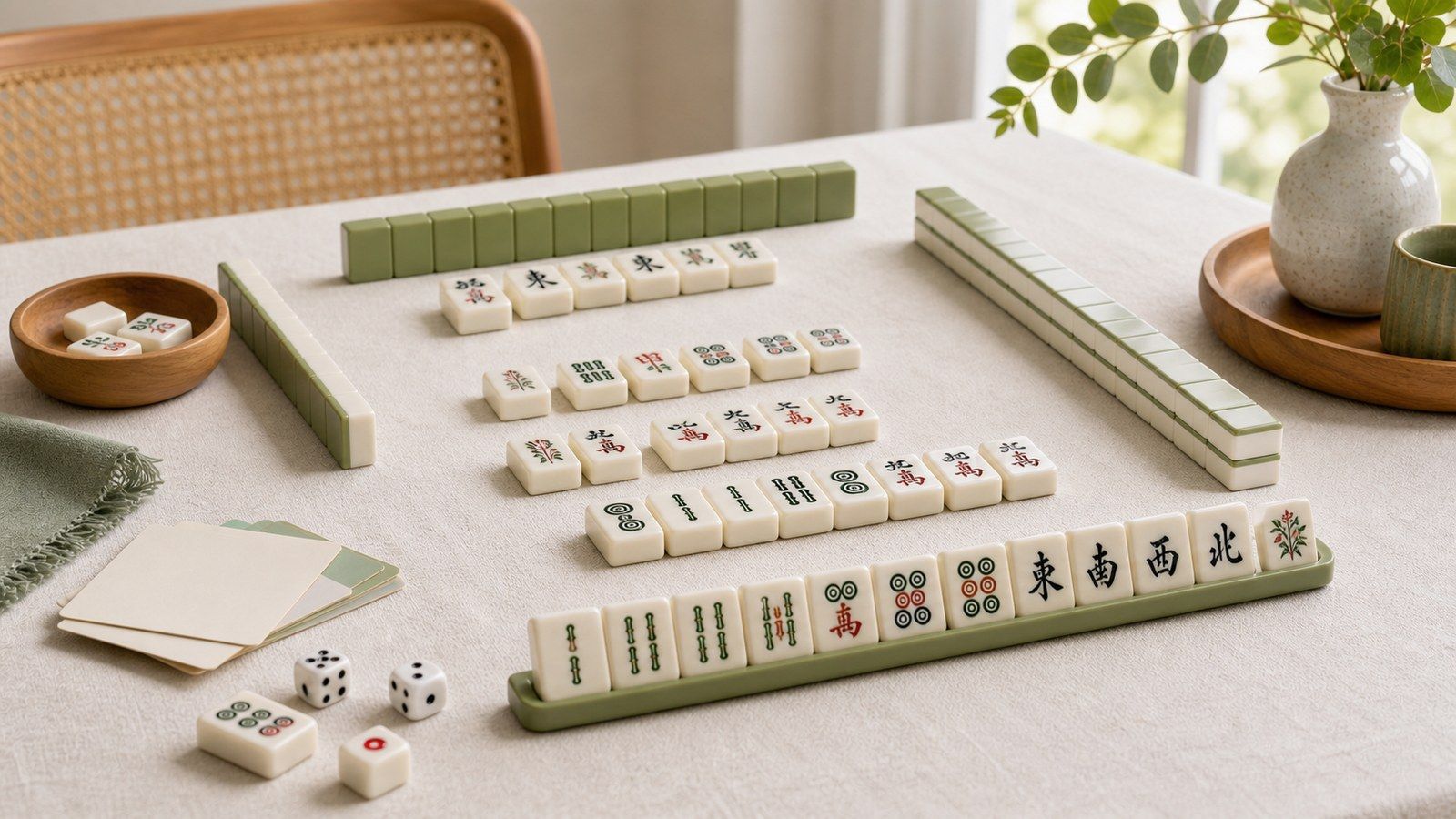
Mahjong is easier to enjoy when beginners know what to ignore, what to practice first, and which habits slow the table down. Many new players assume the hard part is memorizing every scoring rule. In reality, the first challenge is usually much simpler: reading the tiles, keeping the table organized, and making steady decisions without panic.
Here are twelve common beginner mistakes and how to avoid them before your next game night.
1. Trying to learn every rule at once
Mahjong has many variations, and each table may use slightly different scoring. Beginners often overwhelm themselves by trying to master every exception before they can even recognize the suits. Start with the basics: tile groups, turn order, drawing, discarding, and the general idea of forming sets and a pair.
Once that feels natural, scoring becomes much easier to understand.
2. Not sorting tiles clearly
A messy hand makes the game harder than it needs to be. Sort tiles by suit, then by number, and keep winds, dragons, flowers, or jokers in their own section. This simple habit helps you see possible combinations faster.
If you are teaching new players, use a set with clear symbols and good contrast. Readability matters more than decoration during the learning stage.
3. Forgetting which version of mahjong you are playing
American mahjong, Chinese-style mahjong, and other versions do not always use the same accessories or strategy. Before play begins, confirm the rules, whether jokers are used, how flowers are handled, and how winning hands are scored.
This avoids confusion later and helps buyers choose the correct set from the beginning.
4. Discarding too quickly
Fast discards can look confident, but beginners often throw away useful tiles before seeing the shape of their hand. Slow down just enough to ask: does this tile connect with anything, complete anything, or protect a flexible option?
Good play is not about being slow. It is about being deliberate.
5. Ignoring what other players discard
Your own hand matters, but the table also tells a story. Watch which suits appear frequently, which tiles are being avoided, and whether another player seems to be collecting a pattern. You do not need advanced strategy to benefit from simple observation.
6. Holding too many unrelated tiles
Beginners sometimes keep every tile that looks potentially useful. That creates a hand with no direction. As the game develops, choose a likely path and let go of tiles that do not support it.
7. Playing on a poor surface
A noisy, slippery, or crowded table makes learning harder. A soft mat helps tiles move smoothly, protects the table, and creates a defined play area. If your table feels chaotic, improve the setup before blaming the rules.
Browse Playroom Essentials for mats, bags, and accessories that make home play smoother.
8. Choosing a set only because it looks pretty
A beautiful set is wonderful, but the symbols still need to be readable. Beginners should prioritize clear engraving, strong contrast, comfortable tile size, and organized storage. A set that looks good but slows everyone down may not be the best first purchase.
9. Forgetting table etiquette
Every table has its rhythm. Announce discards clearly, keep tiles visible, avoid touching other players’ tiles, and ask questions respectfully. Good etiquette makes beginners easier to teach and keeps the atmosphere friendly.
10. Letting snacks interfere with play
Greasy fingers and drinks near the tiles can damage the set and distract players. Keep napkins nearby, choose low-mess snacks, and move beverages slightly away from the main play area.
11. Practicing only during full games
Short practice sessions are powerful. Spend ten minutes sorting tiles, naming suits, or building simple combinations before guests arrive. Beginners improve faster when they practice recognition separately from scoring pressure.
12. Avoiding questions
Mahjong is social. Asking a good question at the right moment helps everyone learn. If you are hosting beginners, make the first few rounds patient and conversational. A welcoming table creates better long-term players.
Quick FAQ
What should beginners learn first? Tile recognition, turn order, and basic hand structure should come before detailed scoring.
Do beginners need a special set? They do not need a special set, but clear symbols, readable contrast, and practical storage make learning much easier.
How can I practice alone? Sort tiles by suit, build sample sets, and quiz yourself on winds and dragons for a few minutes at a time.
Final thoughts
Most beginner mistakes are not failures of intelligence. They are setup problems, pacing problems, or information overload. Choose a readable set, keep the table organized, learn one layer at a time, and mahjong becomes much more welcoming.
If you are still choosing your first table setup, compare options in Mahjong Sets and look for clarity, comfort, and accessories that match your rules.
Comments: 0
Leave a Reply
Leave a Reply
No comments




East Sun Industrial Centre, 16 Shing Yip Street, Kwun Tong, Kowloon, Hong Kong
(+852) 93519647
hello@mahjongday.com