30 days to return. Free delivery for orders over $200
Your shopping cart is empty!
How to Teach Mahjong to Friends and Family Without Overwhelming Them
May
31,
2026
0 Comments
Teaching mahjong is not just about explaining rules. It is about creating a first experience that feels possible. If new players are hit with too many terms, scoring exceptions, and table habits at once, they may decide the game is harder than it really is.
A better approach is to teach mahjong in layers: first the tiles, then the flow, then the shape of a hand, and finally scoring. This guide gives you a practical plan for introducing friends and family without overwhelming them.
Start with the table, not the rulebook
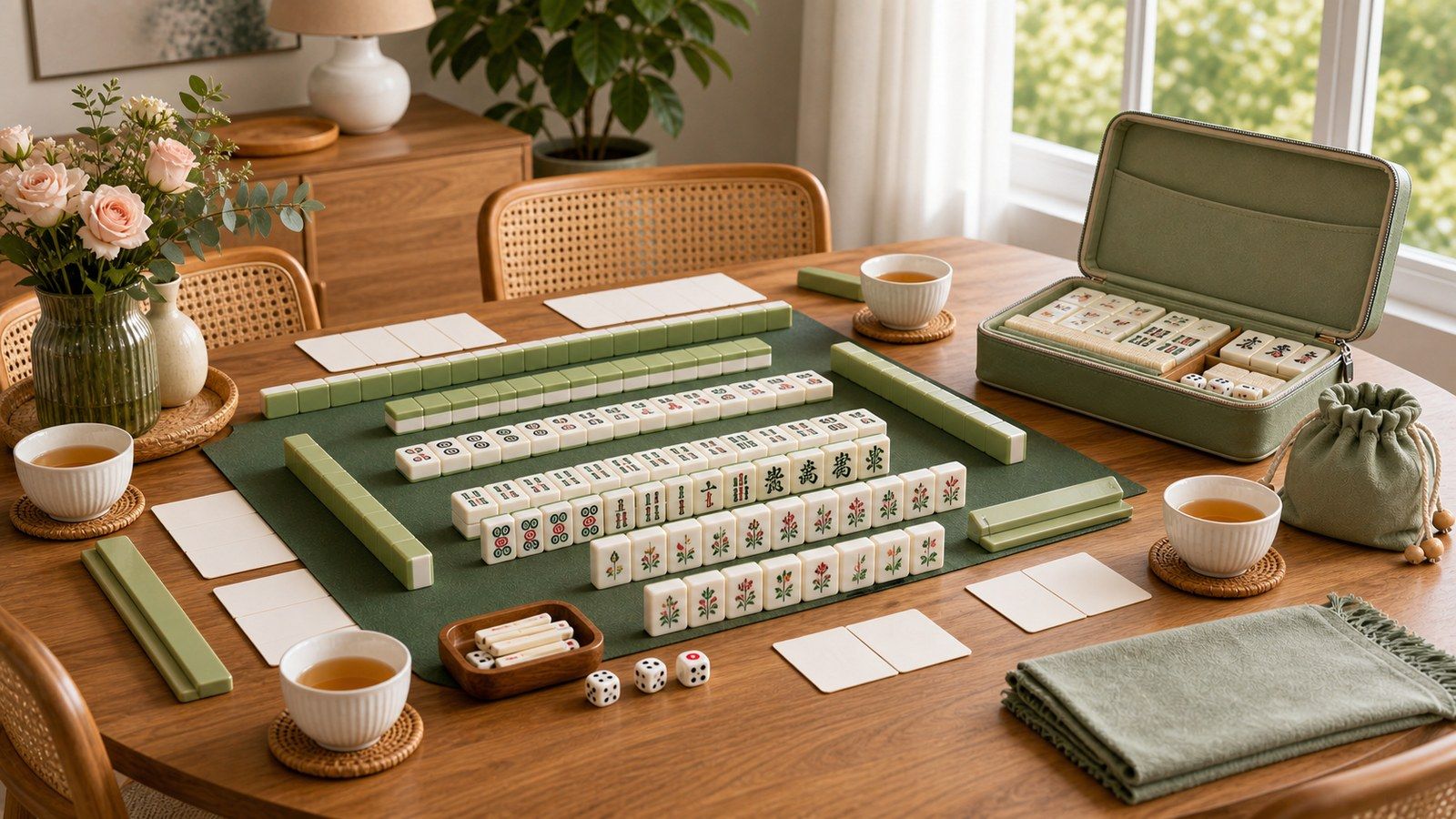
Before explaining anything, set up the table in a clean and inviting way. Use good lighting, a soft mat if available, and enough room for every player. Place the tiles where people can see them clearly. Remove unnecessary extras until you are ready to explain them.
A calm table makes the game feel approachable before the first rule is spoken.
Teach the tile families first
Show the three suits, then winds and dragons. If your set includes flowers, seasons, or jokers, keep them separate until beginners understand the main tile groups. Ask players to sort tiles themselves. Touching and arranging the pieces helps recognition faster than a lecture.
If your group is visual, use a set with crisp symbols and strong contrast. Decorative sets are lovely, but first-time players need clarity.
Explain the goal in one sentence
Do not begin with every scoring rule. Start with the broad idea: players draw and discard tiles while trying to form a complete hand. Once that is understood, explain sets, pairs, and the basic turn rhythm.
Beginners need a mental map before they need fine detail.
Use an open practice hand
An open practice hand is one of the best teaching tools. Let everyone keep their tiles visible for a few turns. Talk through choices, discards, and possible combinations. This removes the pressure of secrecy while players learn the mechanics.
After one practice hand, the first real round will feel much smoother.
Teach only the calls you need today
Depending on your rules, calls may include claiming discards for specific combinations. Explain only the calls your group will use in the first session. Save advanced timing, exceptions, and rare cases for later.
Too much completeness can make a beginner lesson worse. Teach enough to play, then add detail naturally.
Give beginners permission to ask
A welcoming table is patient. Let new players ask what a tile is, whether a discard is reasonable, or why a hand is developing in a certain direction. If the table becomes impatient, the lesson becomes stressful.
Mahjong is a social game. The teaching atmosphere matters as much as the explanation.
Use accessories to reduce friction
Racks, trays, dice, mats, and storage bags can make the table easier to manage. They are especially helpful when teaching because they reduce clutter. A clean setup helps beginners focus on patterns instead of lost pieces.
You can explore useful hosting tools in Playroom Essentials.
End with a simple review
After the first session, review three things: tile groups, turn order, and one or two habits to practice next time. Avoid correcting every mistake. People are more likely to return when they leave feeling encouraged.
Quick FAQ
How long does it take to teach mahjong? A basic first lesson can take 30 to 60 minutes. Real confidence comes after several casual sessions.
Should I teach scoring first? Usually no. Teach tile recognition and turn flow first, then add scoring after players can complete a hand.
What kind of set is best for teaching? Choose readable tiles, good lighting, organized storage, and enough table space for everyone to see clearly.
Final thoughts
The best mahjong teachers make the first game feel friendly rather than perfect. Set up a clear table, teach in layers, use practice hands, and let questions happen. Once beginners feel comfortable, the deeper strategy becomes part of the fun.
If you are preparing a teaching-friendly setup, start with Mahjong Sets that are easy to read and pair them with practical accessories for smoother home lessons.
Comments: 0
Leave a Reply
Leave a Reply
No comments



East Sun Industrial Centre, 16 Shing Yip Street, Kwun Tong, Kowloon, Hong Kong
(+852) 93519647
hello@mahjongday.com