30 days to return. Free delivery for orders over $200
Your shopping cart is empty!
How to Make Mahjong a Family Tradition: Teaching Kids, Grandparents, and First-Time Players at the Same Table
Jun
15,
2026
0 Comments
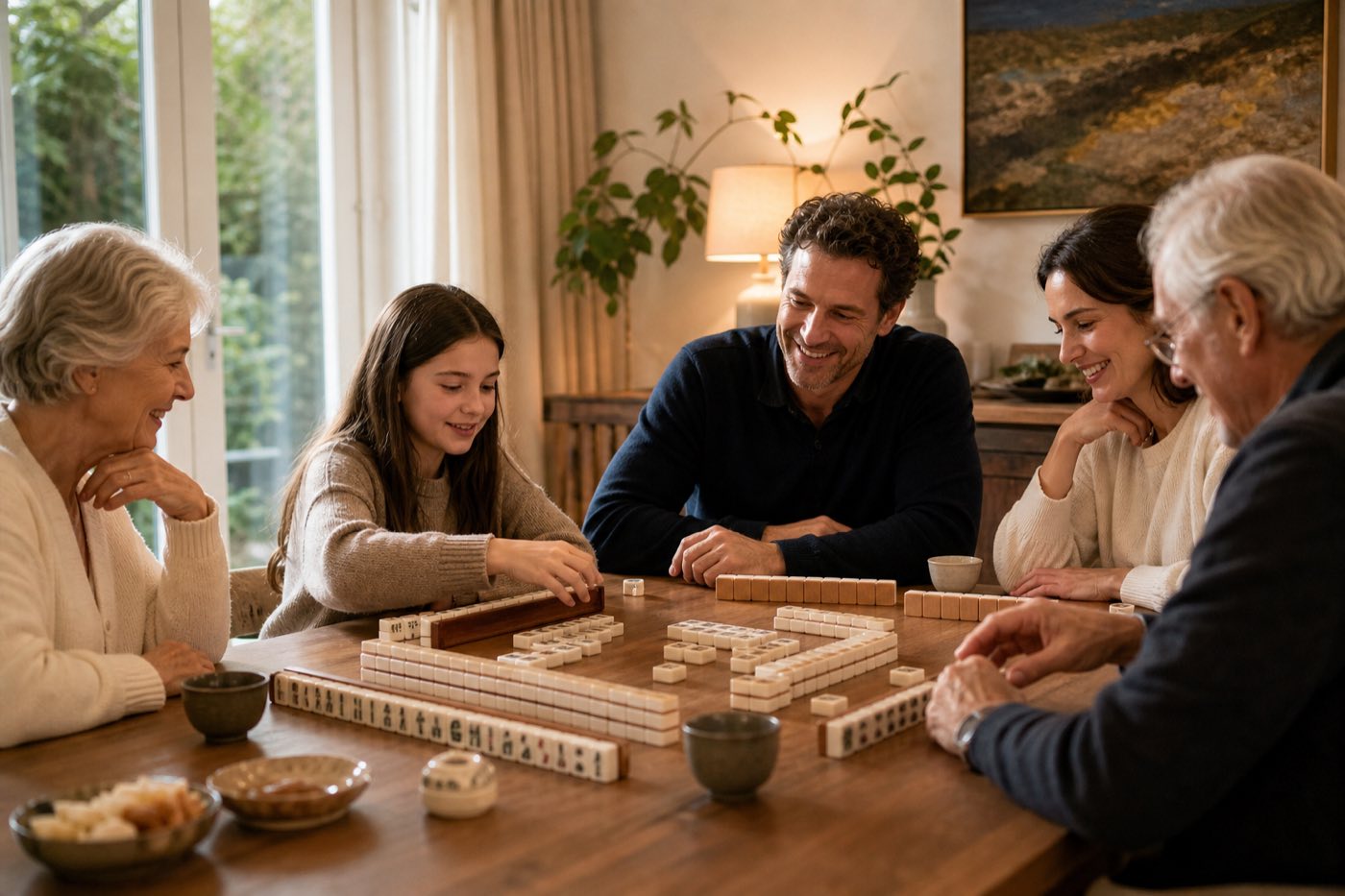
Some family games work for one age group and leave everyone else watching from the sidelines. Mahjong can do the opposite. It gives children a pattern to follow, gives adults something thoughtful to focus on, and gives grandparents a rhythm that feels familiar and social. The trick is setting the table for different experience levels without making the evening feel like a lesson.
Start with one version and one simple objective
The fastest way to lose a room is to explain every rule variation you know. Pick one version for the night, describe what a turn looks like, and tell everyone what success means. For a mixed group, that often means learning tile families, getting comfortable drawing and discarding, and finishing a few open practice hands before you worry about speed.
Let beginners touch the tiles early
People understand mahjong much faster when they can sort tiles with their hands instead of listening to a long verbal explanation. Before the first round begins, ask new players to separate suits, winds, dragons, flowers, or jokers depending on the style you are teaching. That simple handling step reduces the visual overload that many first-time players feel.
Make the table easier to read
A welcoming family table is not crowded. Good lighting, enough elbow room, and racks that keep tiles upright all matter more than fancy decor. If younger players are joining, leave extra table space in the middle so everyone can clearly see discards. If older relatives are playing, avoid overly dim mood lighting and keep drinks or snack plates away from the racks.
Assign one patient guide, not four simultaneous coaches
Nothing overwhelms a beginner faster than being corrected by everybody at once. Choose one calm explainer for each new player or pair newer players together with one experienced host. That keeps the game moving and protects the relaxed energy of the room.
Use short teaching rounds before a full game
Instead of jumping straight into a competitive session, try three lighter rounds first. One round can focus only on identifying suits and honors. Another can focus on calling tiles correctly. A third can focus on completing a simple hand. Once people feel the rhythm, the full game becomes much more enjoyable.
Build in rituals people remember
Traditions are made from repeatable details. A favorite tea pot, a plate of fruit, a linen mat, or a standing Sunday afternoon time slot can matter just as much as the rules. When the setting feels warm and consistent, people begin to associate mahjong with comfort instead of effort.
Keep the conversation part of the game
For Western households especially, mahjong often succeeds as an entertaining ritual because it combines conversation with concentration. Leave room for that. Not every hand needs to be serious. If the table is laughing, asking questions, and slowly improving together, the night is working.
Choose equipment that supports learning
Tiles with clear markings, sturdy racks, and a bag or case that makes setup easy can change the whole experience for new players. A set that feels orderly and attractive is easier to bring out again the following week, and that is exactly how family habits stick.
The best family mahjong table feels inviting, not impressive
You do not need a perfect score, a formal dining room, or an expert group to make mahjong part of family life. You need a clear setup, a little patience, and a table that feels good to gather around. When people leave saying they want to play again, you are already building the tradition.
Comments: 0
Leave a Reply
Leave a Reply
No comments



East Sun Industrial Centre, 16 Shing Yip Street, Kwun Tong, Kowloon, Hong Kong
(+852) 93519647
hello@mahjongday.com