30 days to return. Free delivery for orders over $200
Your shopping cart is empty!
Chinese Mahjong for Beginners: How a Standard Hand Takes Shape at the Table
Jun
16,
2026
0 Comments
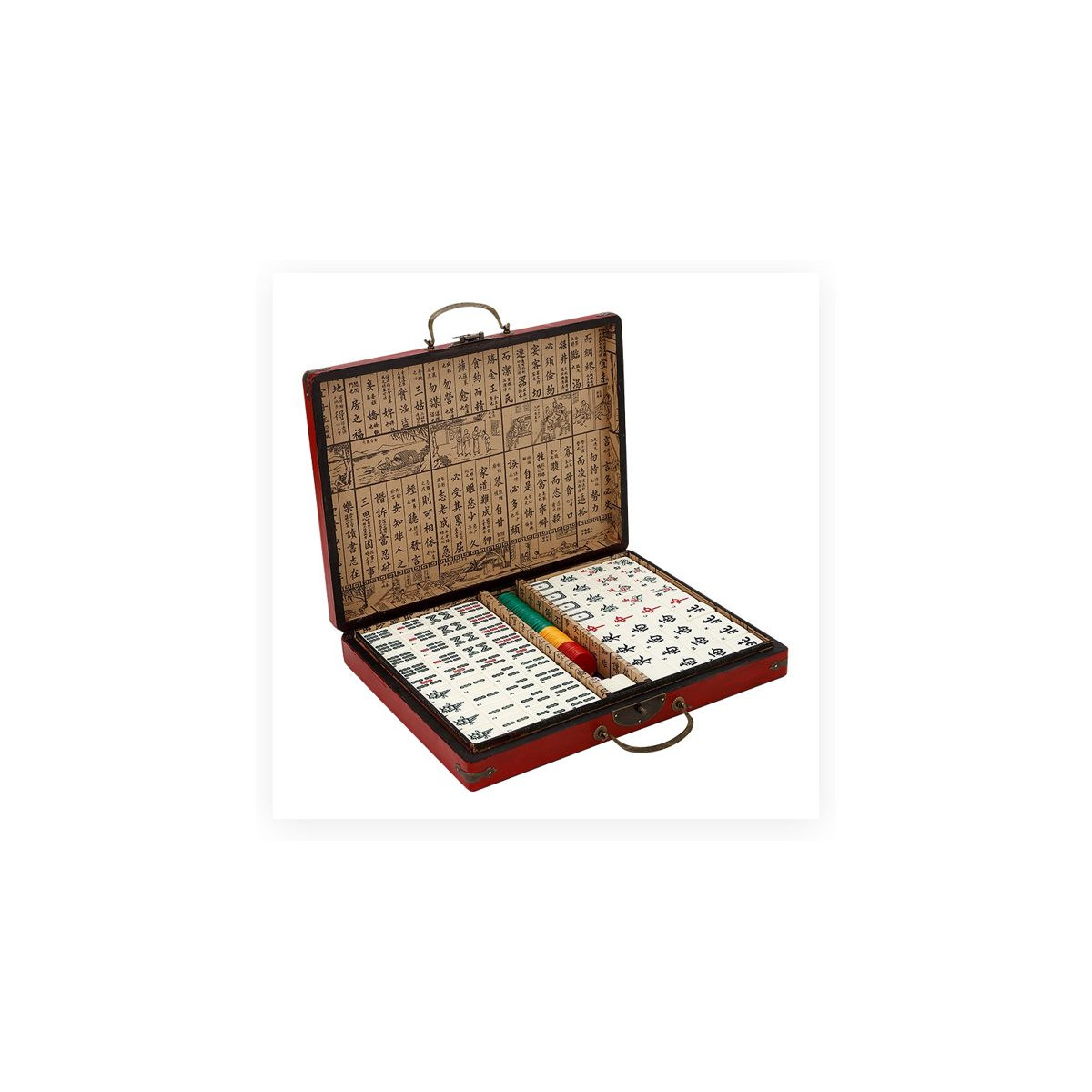
If you are new to Chinese Mahjong, the smartest place to begin is not with edge cases. It is with the basic shape of a hand and the decisions that repeat every round. Once you understand those repeated decisions, the game becomes far less intimidating and much more enjoyable.
Start with the goal, not the jargon
In many beginner-friendly Chinese Mahjong games, your target is a complete hand made from four sets and one pair. A set can be a sequence of three suited tiles, often called a chow, or a matching group of three or four identical tiles, known as a pung or kong. The pair is two identical tiles kept together as your finishing anchor.
That simple framework matters because it helps you evaluate every draw and discard. Instead of asking, “What does this tile mean in theory?” you start asking, “Does this tile help me build a sequence, complete a matching set, or protect my pair?”
What the opening deal is really telling you
When your tiles first come off the wall, resist the urge to sort them only by beauty or symmetry. Sort them so you can see relationships. Group bamboo, characters, and dots. Put honors together. Then scan for the beginnings of structure: near-runs like 3-4 or 6-7, duplicates that could become pungs, and a likely pair that already feels stable.
A beginner mistake is to become emotionally attached to every interesting tile. A more useful approach is to identify which tiles are already cooperating with one another. The hand usually tells you its most natural direction early, even if that direction changes later.
How discards shape the hand in real time
The discard phase is where Mahjong starts to feel alive. Every tile you throw away is both a decision for yourself and information for everyone else. Early in a hand, most players discard isolated honors, terminal tiles, or awkward singletons that do not connect well. As the table develops, each discard becomes more revealing.
For beginners, the best habit is to make clean discards. If a tile does not support a likely sequence, does not strengthen a pair, and does not help a duplicate you are protecting, it is usually a candidate to leave your hand. Clean decision-making matters more than perfect decision-making in the beginning.
When to value sequences over matching sets
Many new players see a pair and immediately want to turn everything into pungs. That can work, but sequences are often easier to complete because more tiles can help them. A 4-5 can be improved by a 3 or 6. A 4-5-6 is already done. By contrast, a single 5 only becomes a pung if two exact matches appear.
This does not mean sequences are always better. It means flexibility has value. In the early and middle stages of a hand, flexible shapes often give you more ways to improve. As the hand tightens, matching sets may become clearer and more practical.
Calling tiles changes both speed and visibility
In Chinese Mahjong, calling a discard to make a chow, pung, or kong can accelerate your hand, but it also reveals information. The moment you expose tiles, the table sees part of your plan. That can affect what opponents discard and what they hold back.
Beginners sometimes call too quickly because the opportunity feels exciting. A better question is whether the call actually improves the hand enough to justify losing concealment and flexibility. If the call gives you a clean, efficient structure, it may be worth it. If it locks you into an awkward shape, patience can be stronger.
The pair is smaller than it looks, but just as important
Players often focus so much on sets that they forget the pair until late in the hand. Then they discover they have four good groups and no realistic pair left. Keep one eye on pair quality throughout the round. A strong pair is not dramatic, but it keeps the whole hand balanced.
If you have two possible pairs, avoid breaking both too early unless the rest of the hand clearly demands it. Preserving one stable pair candidate gives the hand room to finish cleanly.
What a winning tile usually feels like
By the late hand, you are no longer exploring widely. You are narrowing. Your discards become tighter, your waits become clearer, and the hand starts pointing toward a small number of useful tiles. That is when Mahjong becomes especially satisfying. The early clutter resolves into shape.
For a beginner, that feeling is more important than speed. Once you experience how a hand naturally narrows from many possibilities into one finish, the game stops feeling random. You begin to understand not just what to do, but why experienced players seem calm while doing it.
A practical way to learn faster
If you are practicing at home, do not measure progress only by wins. Measure it by whether you can explain your own hand. Can you point to your likely pair? Can you say which tiles improve your two weakest shapes? Can you name the tile you are most comfortable discarding next? Those are the habits that build real fluency.
Chinese Mahjong becomes much easier when you treat each round as a pattern-reading exercise rather than a memory test. Learn to see structure, not just tiles. That is the moment the table starts opening up.
Comments: 0
Leave a Reply
Leave a Reply
No comments




East Sun Industrial Centre, 16 Shing Yip Street, Kwun Tong, Kowloon, Hong Kong
(+852) 93519647
hello@mahjongday.com